Saturday, 21 January 2012

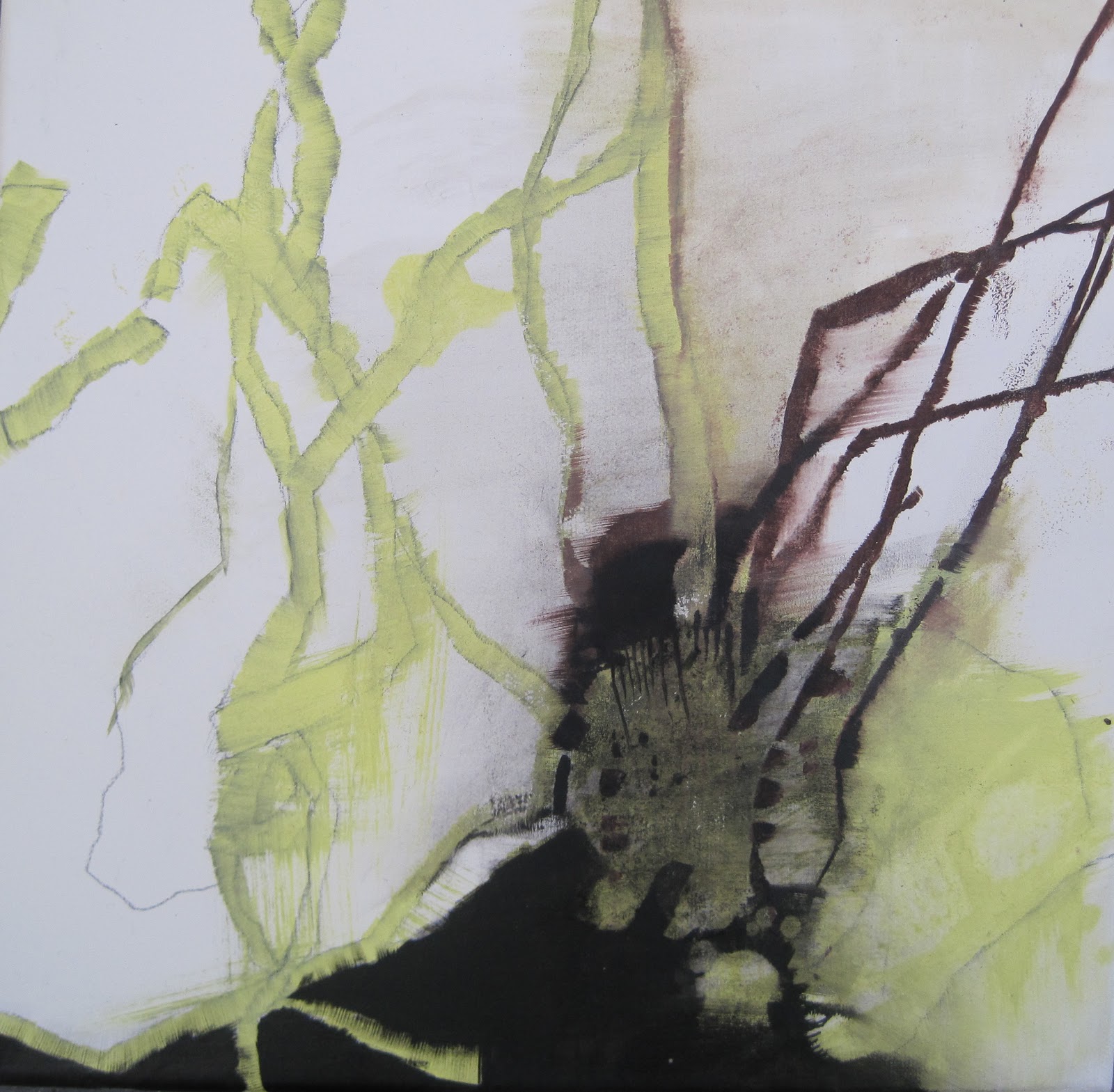
Screenprinting at the School of Art!


Work in progress.
Orange, green and black will be printed next week.


Friday, 20 January 2012

Some observations...

Ibghy & Lemmens, vtls 004518389-53 (Danny O’Connor)
by permission of Llyfrgell Genedlaethol Cymru


One of the many benefits of being a resident artist at the Aberystwyth Arts Centre is that the famous pod-like structures, a.k.a. the studios, are very close to the National Library of Wales, one of five depository libraries in the UK. Not being one to waste a good opportunity, I decided to visit the Library every morning during the month of October on my way to the studio.

I’d sit at a long table, often alongside academics or individuals plotting their family tree, and stare at photographs from randomly chosen collections I had requested the night before. I would stare at them for a long time. Long enough to look for signs. And when there were no signs to be found, I would go ahead and invent them. In this way, hour after hour, day after day, like those beside me prying the doors of their newly found past, I always managed to find what I was looking for.

It was an exercise in observation.

In one box I found 163 photographs of Welsh boxers, most of them from the beginning of the 20th century. I later learnt that many of these boxers were colliers, and that boxing had become an important stage in Welsh society during the boom of industrialisation, producing a prolific stream of champions and the emergence of local working-class heroes.

This box photographs became the starting point for much of the work I conducted during my residency, leading me to research subjects as diverse as the domestication of chance, the development of probabilities and statistics, coal mining in Wales, boxing, portrait photography, and the introduction of graphical representation in political economy.

One of the projects that has emerged from this research, entitled The Space of Observation, is an exhibition of photographs and writing that will be presented at 221a, Vancouver, towards the end of January. A second project, entitled The Wilful Undertaking of Serious Chances, will be further developed into a live projection / performance during a residency at ausland, Berlin, in March. Both projects have been realised in collaboration with Marilou Lemmens, who was able to join me for the last month of my residency.

I am very grateful for the time I was able to spend in Aberystwyth at the Arts Centre, without which, none of these projects would have seen the light of day. I would like to thank Alan, Eve, Carys, Cath, Carol, Paul and Tim from the Arts Centre, as well as Will from the Library, for all of their assistance and guidance. I would also like to wish my flatmates Matthew and Petri, followed by Clare and Lucy, all the best in their future endeavours. 

Lastly, I would like to show appreciation to Francine Royer and the Conseil des arts et des lettres du Qébec for making my residency possible.

Richard Ibghy


Thursday, 12 January 2012

'The deep, dark forest is a common representation of the feared elements within. It can reflect parts of ourselves that are never entirely tamed, that are always somewhat dangerous or chaotic.They are important aspects of ourselves. In some ways, they are the most creative aspects of our inner world. We need to go into the dark forest. It is difficult and mysterious. Still, fresh energies and new ideas come from that place.'
Joseph Young  'How fairy tales shape our lives'


I arrived in Aberystwyth expecting to respond to the tides but is the trees that I find myself drawn to.
Parc Penglais, a stones throw from the studio is a wonderful ancient woodland with it's beautifully twisted Welsh Oak and it's gorse covered old quarry. 


             The grey slate struggles to compete with the stubborn old tree roots.


Walking, photographing, drawing - I am transferring my ideas into small studies in ink, acrylic and oil.


 I'm finding myself using black oil paint which I haven't done for at least 15 years. There is a darkness here. A non threatening but all enveloping darkness. It reminds me of my childhood in Northumberland where pitch black was familiar at the same time as being full of secrets.


                                          These are all works in progress.....


Wednesday, 11 January 2012

The kingdom of fish and chips


My original idea was to do something that involved local people. I started going to different villages to try and meet local welsh people. On my list was Llanbadarn, Borth, Bow Street,
Machynlleth.


All these places seemed to have shut down for the winter period, nobody in the streets, cafes and shops closed... However, fish and chip shops remained open. Spending time in these popular places implied meeting local people.


So I started drawing in fish shops,


and collecting items.


I liked the idea of working on such a typical traditional British institution. I heard that it remained a British preference and did not cross borders even when Britain tried exporting it to France, Belgium or Italy. Fish and chips have failed to become an export. Why has is it such a British thing?

Fish and chips are now my main field of research. I have decided to bring the “Fish and chips institution” in the exhibition space. I like the idea of bringing a popular custom that is associated to the working class in a supposedly cultural and elite institution that is the “museum”. For the open studio night -taking place at the end of February, my studio will become the “Fish and Chips Museum”.


Fish and chips seemed to have been left out by historians.

Fish and chips is generally recognized as a great and quintessentially British institution; but it is difficult to persuade people to take it seriously as a subject of historical inquiry. This is partly because of it is presumed to be, for practical purposes, timeless: it has 'always' been there, but it has no 'history' in the sense of transforming itself, affecting people's lives for good or ill in significant ways, or interacting with the self-evidently important concerns of statesmen and diplomats”

John K. Walton “Fish and Chips and the British Working Class, 1870-1940”, p1


Next week I will make posters in screen printing at the school of art.


I am also working on a fake TV program called “The fish and chips review”. A review of the village of Borth and Bow Street, MoMA in Macynlleth, ciment sculptures by Arthur Jones in a garden in Llanbadarn and finally the Chip Box in Aberystwyth.


Friday, 16 December 2011

Student Interviews

Aberyswyth University student Gemma Meek has helped document Richard Ibghy's time at Aberystwyth Arts Centre by interviewing him prior to his departure. Follow the link below to read the interview in full:

Richard Ibghy on his research process:

"One of the things I like about looking at photographs is that you can take your time; you can look at one image for a long time, as opposed to getting caught up in something that is happening in front of you. Also, I’m not so concerned with trying to understand precisely what is going on in a photograph; which is something I don’t even think is possible. Rather, I am interested in using signs in photographs as springboards to think about other things, things that I am currently researching. I’m very aware, and very comfortable with the fact, that I’m using historical images as a means of stimulating thought and then writing those thoughts down. So I end up writing observations which are more a function of my own concerns than what it is that I am actually seeing."

(http://issuu.com/aberystwytharts/docs/richard_20ibghy_20interview_20nov_20_281_29)

Sunday, 11 December 2011

Tuesday, 6 December 2011

Open Studios and Goodbyes

So the second half of the residency at Aberystwyth disappeared even quicker than the first half did. The last few weeks fell through the hourglass at breakneck speed as I tried to get all the things that I had started to a completed state. 

We had an open studios on the 24 November, which was a nice way to catch up with a lot of people that I have met over the last three months, and to show some of the things I have been working on. This included a set of portraits, some costumes, some masks entitled 'three quack doctor's masks for the purposes of self diagnosis - the coroner, the psychologist & the surgeon', and a chair banner/costume that I just finished. [also we had a chance to finish off the packet of fireworks I had left over from making a film].


There are three projects that I have been working on mainly….

A series of portraits based on an image that I found at the Ceredigion Museum
I was interested in the history of the Welsh folk costume, an image that you know as the ubiquitous dress of women on postcards of Wales. I was lucky to discover that Michael Freeman, the curator at the Ceredigion Museum is an expert in the history of the Welsh women's folk costume. How this dress came to be associated with a national identity is a curious process in itself, but I wanted to look a little beyond this history. Through the process of going through some victorian examples of people wearing this costume we came across a very curious image indeed…


This photograph provides no immediate clues about its origin or its intention, but this is what I like the most about it. Why had this bearded man gone to the trouble of being photographed in a welsh folk costume, and who was the photograph intended for?

Perhaps this image was intended simply as a joke, but it led me to discover more about the Rebecca Riots, a series of protests by farmers and agricultural workers in Wales in the 1840s over unfair taxation. The protesters dressed as women for disguise and invoked a short verse from the bible. The image is also familiar to me as the man/woman character in European folk drama and ritual, a figure that plays with the topsy turvy nature of folk celebration, and a distant relative of the modern pantomime dame.

Working with Stuart Evans at the musuem, I created a series of portraits of men wearing traditional women's folk costume, using the image above for a starting point.


Straw Devils
There are many examples of straw costumes for folk rituals across Europe and the rest of the world, but I was curious about the possibility of constructing some costumes from drinking straws. These costumes became two devil characters after I had been reading Edmund Jones' accounts of appearances and sightings of the devil accross Wales during the 1700s. After his his admission that he never really bothered to come to Cardigonshire and his firm belief that had he made it to these parts then he would have "received many accounts" of devilish activity and appearance, I decided that my characters would be a kind of example of a devilish occurrence in these parts.


I made two straw devils, one a mainly white one, with a dash of colour, that I decided was a 'devil of the daytime', and partnered this with a black devil, the 'devil of the nighttime'. I ordered 10,000 drinking straws to make these suits, and started by sewing them into strings, and then sewing these strings onto an undersuit. Like some of the ritual devils that you see in folk processions in eastern Europe, each costume has a long red tongue hanging down from its head. 


I got the chance to use the costumes to film a short ritual involving a couple of other costumes I have made, and the University Cheerleaders.  I am still editing this piece, but will post it when I have finished.


The Sheep Stealer
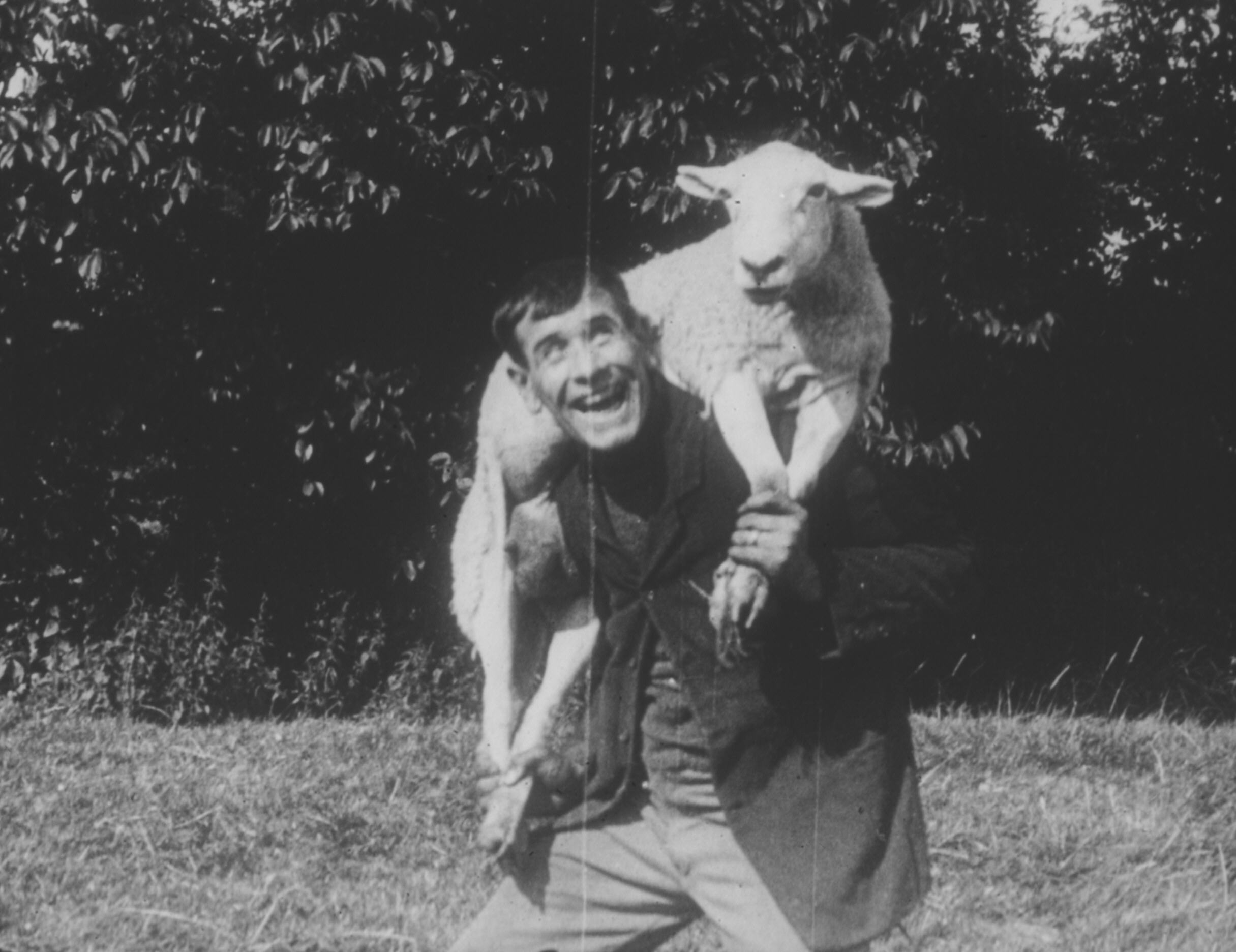
One part of the residency at the Art Centre was to make an artwork with a group of people in the area. In the first few days that I was in Aberystwyth I came across the films of William Haggar in the Screen & Sound Archives at the National Library of Wales. I thought these films were amazing, and the humour and life in the stories he was telling seemed like a great point to start work with a group of people in the area. The same day that I had been looking at the Haggar films in the library, I had come across a photographic exhibition on the top floor of the library celebrating the history and the 70th anniversary  of the Young Farmers Clubs in Ceredigion. The YFC seemed to be an amazing combination of rural skills and amateur dramatics taking place in fairgrounds and fields across the county. 

The film that stood out to me initially had been 'The Sheep Stealer" made by Haggar in 1908, and after a few weeks of trying I managed to make contact with a group of YFC in Tregaron, not too far from Aberystwyth. After a few meetings we set a date and filmed a new version of the film on the farm belonging to the dad of one of the girls in the group. I shot both a digital and a super8 version of the film, and next year the both the original William Haggar film, and the new one we have worked on will be shown at the National Library.


And so an amazing three months in Aberystwyth comes to an end. 

Thanks to Eve, Carys, Cath, Tim, Carol & Paul at the Art Centre, to Michael, Stuart & Jill at the Ceredigion Musuem, Petri & Richard my fellow resident artists and housemates, and a special thanks to Pete Stephenson & Ali Matthews for all their help.


Matthew Cowan
www.matthewcowan.net